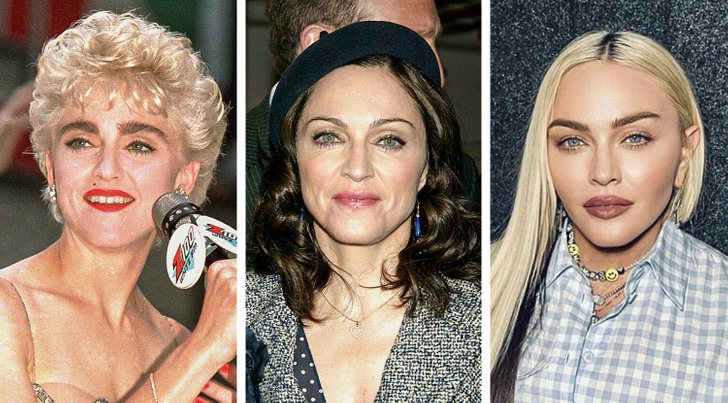
Child Stars Then and Now – You Won’t Believe How They Look Today
The cultural fascination with the maturation of young performers remains a cornerstone of the entertainment discourse. When examining Child Stars Then and Now – You Won’t Believe How They Look Today, the observer is rarely just looking at the passage of time. Instead, they are witnessing the intersection of biological development, the high-pressure environment of the industry, and the subsequent “identity pivots” that occur once the cameras stop rolling. In 2026, this narrative has evolved from a tabloid “gotcha” to a sophisticated study in career longevity and psychological resilience.
Historically, the public viewed the aging of a child actor as a linear process, often fraught with the “former star” stigma. Today, the landscape is marked by a diverse array of outcomes: the billion-dollar entrepreneurship of the Olsen twins, the academic rigor of figures like Bridgit Mendler (now an aerospace CEO), and the quiet, intentional departures of those who chose professions in medicine or law. The “unbelievable” element of these transformations often lies not in a sudden change of appearance, but in the radical shifts in lifestyle and professional agency.
This article serves as a definitive analysis of these transitions, moving beyond the surface-level “glow-up” to explore the systemic forces that shape the lives of former young icons. By dissecting the tools, costs, and psychological frameworks involved, we provide a roadmap for understanding the reality of child stardom in the modern era.
Table of Contents
-
Defining the Modern “Child Star” Lifecycle
-
H2: Understanding “Child Stars Then and Now – You Won’t Believe How They Look Today”
-
Historical and Systemic Evolution of Child Labor in Hollywood
-
Conceptual Frameworks: The Psychology of Early Fame
-
Key Categories of Post-Fame Outcomes
-
Detailed Real-World Scenarios: 2026 Case Studies
-
Economic Realities: Trust Funds and Opportunity Costs
-
Risk Landscape: When Stardom Fails to Translate
-
Common Misconceptions and Myth-Busting
Understanding “Child Stars Then and Now – You Won’t Believe How They Look Today”
To effectively navigate the landscape of Child Stars Then and Now – You Won’t Believe How They Look Today, one must first decouple physical maturation from professional failure. The phrase “unbelievable” is frequently used as a rhetorical hook, but in an editorial context, it describes the profound gap between a character’s “perpetual youth” in syndication and the actor’s actual, multifaceted adult reality.
A primary misunderstanding is that the “shock” of a star’s appearance is always due to aging or surgical intervention. In reality, the shock often comes from the normalization of the star. When a performer like Danny Lloyd (The Shining) appears as a biology professor, or Kay Panabaker (Disney Channel) is seen as a zookeeper, the public must reconcile the mythic screen image with a grounded, non-celebrity existence. This cognitive dissonance is a major driver of the “then and now” phenomenon.
The risk of oversimplification lies in the “trauma narrative”—the assumption that every child star is destined for a public breakdown. While systemic issues persist, 2026 data shows an increasing number of former child stars leveraging their early earnings to fund elite educations and tech startups. The “unbelievable” transformation today is often one of intellectual and financial autonomy, rather than just a change in hairstyle or fashion.
Deep Contextual Background: The Evolution of Visibility
The standards for child stars have shifted alongside the labor laws designed to protect them. In the 1930s, Shirley Temple was a factory of one, subject to grueling schedules with little financial oversight. The 1939 “Coogan Act” (named after Jackie Coogan) was the first major step toward protecting child earnings, but it took decades for the industry to address the psychological toll of being a “brand” before being a person.
-
The 1990s “Edutainment” Era: The rise of Disney and Nickelodeon created a “factory” for teen idols. Figures like Lindsay Lohan and the Sprouse twins were groomed for multi-platform dominance, making their later “disappearances” or rebrands all the more striking.
-
The Digital Surveillance Era: In 2026, child stars face 24/7 scrutiny via social media. This has led to a “transparency movement” where stars like Jennette McCurdy (I’m Glad My Mom Died) have used their adult platform to expose the darker realities of on-set dynamics, fundamentally changing how fans view their “then” photos.
-
The Sharenting and Influencer Shift: A new category of “child star” has emerged—the kid influencer. This has forced legal frameworks to adapt, as the line between “family fun” and “commercial labor” blurs, creating a new wave of “then and now” stories for the TikTok generation.
Conceptual Frameworks: The “Identity Pivot”
To analyze why a former star appears on a list of Child Stars Then and Now – You Won’t Believe How They Look Today, we can apply several mental models:
-
The Reclamation Model: This applies to stars who walked away to “get their childhood back.” By choosing “normal” jobs, they reclaim an identity not dictated by a studio. Their “unbelievable” look is often just the look of a relaxed, non-famous adult.
-
The Entrepreneurial Pivot: Figures like Mary-Kate and Ashley Olsen or Selena Gomez utilize their early fame as “seed capital” for business empires. Their adult appearance is often the “Executive Aesthetic”—sharp, controlled, and strategically curated.
-
The Academic Refuge: Many child stars use their wealth to enter high-barrier fields (Law, Physics, Medicine). The shock for fans is seeing a “teen heartthrob” in a laboratory or courtroom, challenging the “dumb actor” stereotype.
Key Categories of Post-Fame Outcomes
The trajectories of former child stars can be grouped into distinct categories, each with its own long-term trade-offs.
Detailed Real-World Scenarios: 2026 Case Studies
The following scenarios represent the most significant archetypes of the “Child Stars Then and Now” narrative in 2026.
1. The “Academic Titan”: Bridgit Mendler
Mendler’s journey from Disney’s Good Luck Charlie to the CEO of Northwood Space (a satellite data startup) and an MIT/Harvard scholar is arguably the most “unbelievable” pivot of the decade. Her “now” look is that of a tech executive, a far cry from the teen sitcom star of the 2010s.
2. The “Rugged Rebrand”: Will Poulter
Poulter, once the “awkward” kid in The Chronicles of Narnia and We’re the Millers, underwent a physical transformation into a leading man with a sculpted profile. His 2023-2026 resurgence in roles like The Bear highlights how “glow-ups” can be leveraged for more serious, high-prestige acting work.
3. The “Normal Life” Icons: The Mrs. Doubtfire Kids
Lisa Jakub (writer/yoga teacher) and Mara Wilson (author) have both publicly retired from acting. Their “unbelievable” look today is defined by their lack of “Hollywood polish,” embracing a natural, grounded aesthetic that supports their work as mental health advocates.
4. The “Resilient Return”: Lindsay Lohan
Lohan’s 2025-2026 “comeback” era, marked by a multi-picture Netflix deal and a more settled, mature appearance, serves as a counter-narrative to the “tabloid tragedy” trope. Her transformation is one of restoration—returning to the screen with a look of health and stability.
Economic Realities: The Cost of the “Clean Break”
Walking away from a lucrative acting career requires significant financial planning. The following table outlines the resource dynamics for a former star transitioning to a “normal” life.
Risk Landscape and Failure Modes
The transition from a child star to an adult civilian or professional is fraught with specific “failure modes”:
-
The Stagnation Loop: The inability to find a new identity, leading to a reliance on “nostalgia conventions” and minor reality TV appearances.
-
The “Coogan” Failure: Cases where parents or managers misappropriated funds, leaving the adult star with no “exit capital” to fund an education or career pivot.
-
Public Scrutiny Burnout: The psychological toll of being compared to one’s younger self, often leading to body dysmorphia or social withdrawal.
Common Misconceptions and Myth-Busting
-
“They’re all rich”: While some are, many child stars on mid-tier shows earned less than a standard office salary once taxes and management fees were removed.
-
“They all had plastic surgery”: In many cases, the “shocking” change is simply puberty and weight loss. Skeletal structures change significantly between ages 12 and 25.
-
“They failed if they aren’t still acting”: Most “disappeared” stars choose to leave. In 2026, a “quiet life” is increasingly viewed as a success metric for former child actors.
Conclusion
The study of Child Stars Then and Now – You Won’t Believe How They Look Today is a study in human adaptability. In 2026, the “unbelievable” element is no longer the tabloid scandal, but the sheer variety of paths these individuals have taken. From the boardroom to the classroom, former young icons are proving that their early fame was a chapter, not the entire book. Understanding their transformations requires us to look past the pixels and see the person who survived the spotlight.
I can provide a more detailed breakdown of the specific legal protections for “Influencer Kids” in 2026 or a comparative analysis of the “Disney” vs. “Nickelodeon” alumni career paths. Would you like me to analyze the specific ROI of a celebrity-backed tech startup?
Former Child Stars Who Have Normal Jobs
This video offers a visual retrospective on child stars who left the industry for traditional careers, providing the context of their “then and now” lives.