The Digital Mirror: A Deep Analysis of Celebrity Aesthetic Transformation
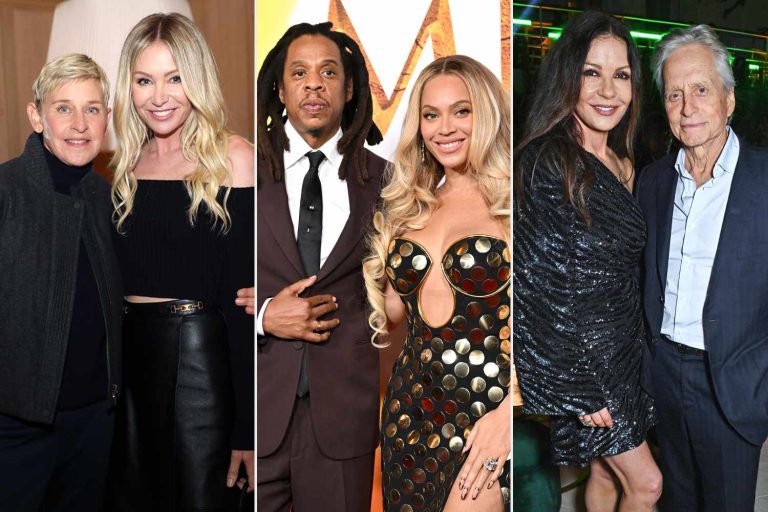
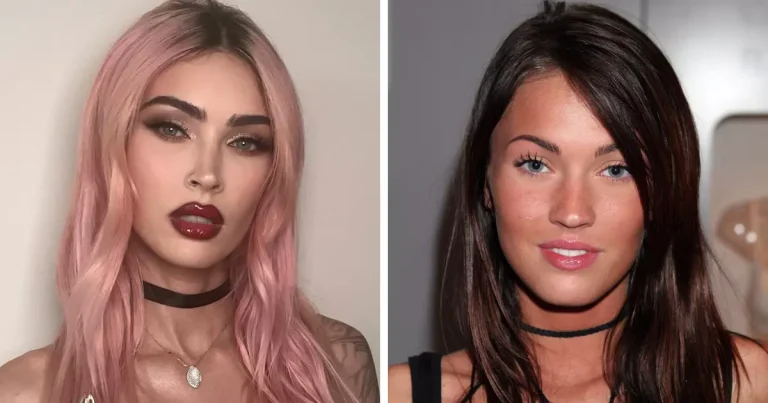
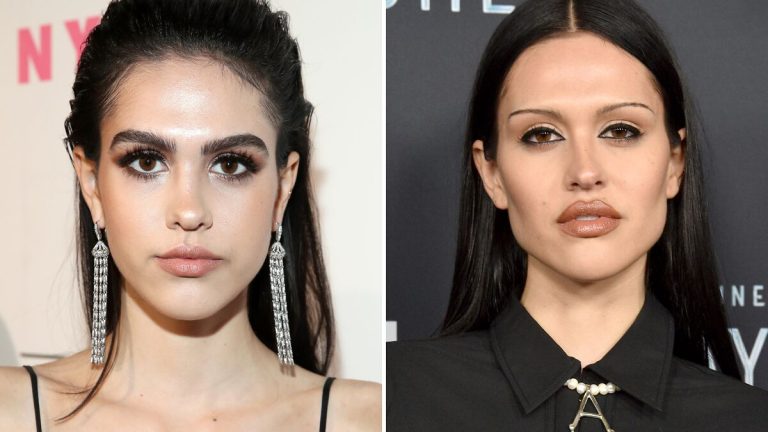
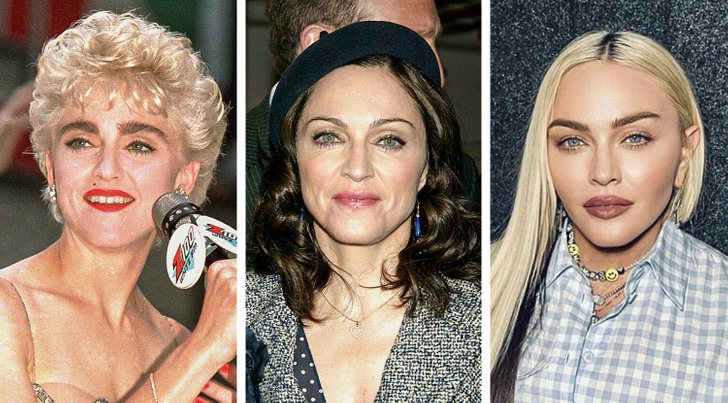
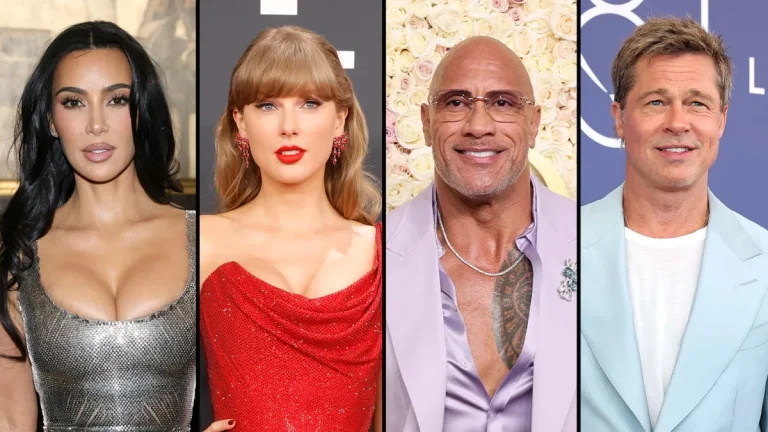
The visual landscape of modern fame is no longer governed by the soft-focus lenses of the mid-20th century. In an era of ultra-high-definition cinematography and the relentless, unedited scrutiny of social media, the celebrity face has become a high-stakes architectural project. When we observe Celebrity Plastic Surgery: Stars Who Look Completely Different Now, we are not merely looking at vanity; we are looking at the culmination of a multi-billion-dollar industry designed to fight the biological inevitability of time. This phenomenon represents a complex intersection of medical advancement, psychological pressure, and a shifting cultural definition of what it means to look “normal.”
The transformation of a public figure often follows a non-linear path. It begins with subtle maintenance—the strategic use of neurotoxins or dermal fillers—and can evolve into structural overhauls that fundamentally alter the bone-to-soft-tissue ratios of the face. The result is often a “new” person who retains the celebrity’s name but few of their original distinctive features. This creates a fascinating cognitive dissonance for the audience, who must reconcile their parasocial memories of a star’s “original” face with the high-gloss, standardized aesthetic of their current iteration.
To understand these shifts, one must move beyond the “before and after” tabloid narrative. The reality is rooted in the industrialization of beauty. In Hollywood, the face is a primary asset, subject to the same depreciation and maintenance cycles as any high-value piece of infrastructure. However, unlike infrastructure, the human face is biologically programmed to change. The tension between this natural decay and the professional requirement for eternal youth is what drives the radical transformations we see today.
Table of Contents
-
Understanding “Celebrity Plastic Surgery: Stars Who Look Completely Different Now”
-
Deep Contextual Background: The Evolution of the Hollywood Face
-
Conceptual Frameworks: Mental Models of Transformation
-
Key Categories of Radical Cosmetic Change
-
Detailed Real-World Scenarios and Case Studies
-
The Economics of Maintenance: Cost and Resource Dynamics
-
Support Systems and Recovery Strategies
-
The Risk Landscape: Compounding Failures and Regrets
-
Governance of Appearance: Long-Term Adaptation
-
Measurement and Tracking: The Metrics of Aesthetic Change
-
Common Misconceptions and Myths
-
Ethical and Contextual Considerations
Understanding “Celebrity Plastic Surgery: Stars Who Look Completely Different Now”
The phrase Celebrity Plastic Surgery: Stars Who Look Completely Different Now often serves as a focal point for public intrigue, yet it is rarely analyzed with the seriousness it deserves as a sociological and medical event. A radical transformation is seldom the result of a single surgery; rather, it is the “Compounding Effect” of decades of minor interventions that eventually reach a tipping point. When the cumulative volume of filler exceeds the skin’s capacity to support it, or when multiple facelifts have pulled the underlying musculature into a new orientation, the individual crosses the threshold into looking “completely different.”
A common misunderstanding is the belief that these changes are always “mistakes.” In many instances, the transformation is a deliberate choice to align with a specific aesthetic subculture or “brand.” For example, the “Instagram Face”—characterized by high cheekbones, fox eyes, and a hyper-defined jawline—has become a standardized template that celebrities adopt to maintain relevance in a digital-first economy. The goal is no longer to look like a younger version of oneself, but to look like a filtered version of an idealized archetype.
Furthermore, we must account for the “Uncanny Valley” effect. This occurs when a face looks almost human but possesses subtle deviations—lack of micro-expression, over-filled “pillow” cheeks, or a disconnected “windblown” eye shape—that trigger an instinctive unease in the viewer. The stars who look “completely different” are often those who have transitioned through the Uncanny Valley, trading their unique facial signatures for a polished, yet alien, symmetry.
Deep Contextual Background: The Evolution of the Hollywood Face
Historically, celebrity enhancement was a clandestine affair. During the 1940s and 50s, stars like Marilyn Monroe or Rita Hayworth underwent subtle procedures—hairline electrolysis, nasal refinement, or dental work—that were treated as industrial secrets. The goal was “invisible enhancement.” The public was led to believe that stars were simply born with a level of perfection that ordinary humans lacked.
The shift toward the “obvious” transformation began in the 1990s and 2000s, coinciding with the rise of reality television. Figures like the Kardashian family or the cast of various “Housewives” franchises turned the process of aesthetic change into a narrative arc. Plastic surgery moved from the shadows to the spotlight, becoming a status symbol rather than a secret shame. This period introduced the concept of the “overfilled” face, as practitioners relied heavily on early-generation fillers to mimic youth.
By 2026, the trend has bifurcated. On one hand, we see the rise of “Preservationist Aesthetics,” where stars use regenerative medicine (stem cells and exosomes) to age slowly. On the other hand,w e see the “GLP-1 Transformation.” The widespread use of weight-loss medications like Ozempic has created a specific type of rapid aging known as “Ozempic Face,” where sudden volume loss in the midface requires aggressive surgical intervention to correct. This has led to a new wave of celebrities who look dramatically different within months, not years.
Conceptual Frameworks: Mental Models of Transformation
To analyze why certain stars undergo such radical changes, we can apply several conceptual frameworks.
1. The Ship of Theseus Model
In this philosophical thought experiment, every part of a ship is replaced over time until none of the original components remain. Is it still the same ship? Similarly, when a celebrity undergoes a rhinoplasty, a chin implant, multiple blepharoplasties, and a deep-plane facelift, they eventually reach a state where no “original” tissue is visible. The public’s struggle to identify the star is a literal reaction to this biological replacement.
2. The Sunken Cost Fallacy of Aesthetics
Once a celebrity begins down the path of significant intervention, they often feel they must “keep going” to fix the unintended consequences of previous surgeries. This leads to a cycle of revision surgeries where the goal is no longer improvement, but the mitigation of previous “work.” This is a primary driver in the “look completely different” category.
3. The Digital Symmetry Bias
Human brains are wired to find symmetry attractive, but modern digital filters have distorted our baseline for what is achievable. Celebrities, who spend hours viewing themselves through high-end filters, often develop “Snapchat Dysmorphia.” They seek surgical solutions for a level of symmetry that only exists in a 2D digital plane, leading to a “flattened” and unnatural 3D appearance.
Key Categories of Radical Cosmetic Change
The transformations that lead to the label of Celebrity Plastic Surgery: Stars Who Look Completely Different Now generally fall into several distinct surgical archetypes.
| Category | Typical Procedures | Visual Outcome | Primary Risk |
| Structural Overhaul | Jaw shaving, chin implants, brow bone reduction | A fundamental change in face shape (e.g., round to heart-shaped). | Nerve damage and loss of functional expression. |
| The “Volume Collapse” | Excessive filler followed by “Ozempic” weight loss | A hollowed or “melted” appearance requires a facelift. | Tissue laxity and skin thinning. |
| The “Fox Eye” / Midface Lift | Lateral canthopexy, thread lifts, and temporal lift | An upward, slanted eye shape that erases the natural “hooding” of youth. | Permanent asymmetry and “startled” expression. |
| The Buccal Fat Era | Removal of buccal fat pads from the cheeks | A hyper-sculpted, gaunt midface. | Premature aging as the face loses its natural support later in life. |
| The Revision Cycle | Multiple rhinoplasties or secondary facelifts | A “refined” but increasingly fragile-looking facial structure. | Compromised blood flow and scarring (fibrosis). |
Realistic Decision Logic
In Hollywood, the decision to undergo a radical change is often “Reactive.” A star might notice a single “bad” photo from a premiere and over-correct with fillers. When those fillers migrate, they seek a surgical lift to “reset” the face. This reactive cycle is how many celebrities end up looking unrecognizable—they are chasing a fix for a problem that was created by the previous fix.
Detailed Real-World Scenarios
Scenario 1: The “Method” Aging and Repair
An actor loses 40 pounds for a role, causing significant facial sagging. To recover for their next “glamorous” role, they undergo a mini-facelift and aggressive fat grafting.
-
The “Different” Trigger: The fat grafting is over-applied to compensate for the loss, leading to a “puffy” appearance that obscures their original bone structure.
-
Outcome: The actor looks “younger,” but the character of their original face—the unique lines and hollows—is gone.
Scenario 2: The Teen Star Maturation
A star who became famous at 15 wants to shed their “childhood” image. They undergo a rhinoplasty, lip fillers, and jawline contouring by age 21.
-
The “Different” Trigger: Because their face hadn’t fully finished developing naturally, the surgeries “freeze” their features in a way that looks disconnected from their natural maturation process.
-
Outcome: At 25, they look like a 40-year-old trying to look 20, creating a jarring visual disconnect.
The Economics of Maintenance: Cost and Resource Dynamics
The financial investment required to achieve and maintain a “completely different” look is astronomical. It is not a one-time purchase but a subscription model to the medical-aesthetic complex.
Cost Ranges for Major Transformations
-
Tier 1: Non-Invasive “Gateway” (Botox/Fillers/Lasers): $15,000 – $40,000 per year.
-
Tier 2: The Mid-Level “Refresh” (Rhinoplasty/Blepharoplasty): $30,000 – $70,000.
-
Tier 3: The Full Transformation (Deep Plane Facelift/Neck Lift/Fat Transfer): $100,000 – $300,000+.
Opportunity Costs
For a celebrity, the cost of “looking different” includes the “Downtime Tax.” A deep-plane facelift requires 3 to 6 weeks of social hiding. In a 24/7 media cycle, this can mean missing a major festival, a brand launch, or a project window. This is why many stars opt for “lunchtime” thread lifts or excessive fillers—procedures that require less downtime but eventually lead to the “over-processed” look that causes them to appear unrecognizable.
Tools, Strategies, and Support Systems
To manage the fallout and maintenance of these changes, the modern celebrity utilizes a sophisticated ecosystem.
-
Hyperbaric Oxygen Chambers: Used post-surgery to reduce swelling and speed up the “rebranding” of the face.
-
Dissolving Agents (Hyaluronidase): An essential tool for the modern star, used to “erase” bad filler before a new surgical procedure.
-
Lymphatic Drainage Specialists: Massage therapists who work to move fluid out of the face to prevent the “puffy” post-filler look.
-
Biological Age Mapping: Using epigenetic clocks to see if their aesthetic interventions are matched by internal cellular health.
-
Stealth Recovery Villas: High-security medical recovery centers where stars can heal away from paparazzi lenses.
-
3D Facial Sculpting Software: Used by surgeons to show celebrities how a “new” face will look in different lighting conditions before a single incision is made.
Risk Landscape: Compounding Failures and Regrets
The primary risk in the quest for a new face is not “bad” surgery, but Bio-Incompatibility.
Taxonomy of Risks:
-
Filler Fatigue: Over-stretched skin that can no longer contract, leading to a permanent dependency on volume.
-
Surgical Stigma: The loss of “marketability” in serious acting roles where the audience can no longer “read” the actor’s emotions through the surgical tension.
-
The “Pillow Face” Compounding: When a star uses filler to hide the aging of the skin, but the weight of the filler actually accelerates the sagging.
-
Nerve Neuropathy: Small, permanent changes in how the lips or eyelids move, making the celebrity look “unnatural” during speech.
Governance, Maintenance, and Long-Term Adaptation
For a celebrity to successfully navigate a radical transformation without becoming a “cautionary tale,” they must implement a Governance Strategy.
The Aesthetic Audit Checklist:
-
Biannual: Comparison of high-res photos with a “Baseline Year” (the face they are most recognized for).
-
Monthly: “Filler Scan” to ensure no migration into the lower face or under the eyes.
-
Trigger Point: If the “inter-canthal distance” (space between eyes) or the “philtrum length” (space between nose and lip) has been altered by more than 10%, all interventions must stop for a 12-month “Rest Period.”
Measurement, Tracking, and Evaluation
How does the industry measure the success of a transformation? It isn’t just “looking good”; it is “Brand Stability.”
-
Leading Indicators: Positive social media sentiment, brand contract renewals, and casting director feedback.
-
Lagging Indicators: “Meme-ification” of certain features, declining engagement on “close-up” photos, and a shift toward “voice-only” or “animated” work.
-
Documentation Examples:
-
3D Vector Analysis: Tracking the “lift” of the malar fat pads over a decade.
-
Micro-Expression Mapping: Testing if the celebrity can still perform the “standard seven” human emotions (joy, sorrow, etc.) effectively on camera.
-
Common Misconceptions and Myths
-
“It’s just good makeup/skincare”: No cream can relocate a fat pad or change the shape of a nasal bridge.
-
“They are addicted to surgery”: Often, it’s not addiction but a series of “correctional” procedures to fix previous work.
-
“Facelifts are for old people”: The “Mini-lift” is now common among celebrities in their late 20s and early 30s as a preventative measure.
-
“You can just dissolve it all”: Hyaluronidase doesn’t always work, and it can sometimes damage the body’s natural collagen in the process.
-
“Surgery stops the aging process”: Surgery only changes the appearance of aging; the underlying biological decay continues at the same rate.
-
“They don’t know they look different”: Celebrities often have “Aesthetic Blindness,” where they only see the “flaw” they are fixing and lose sight of the holistic face.
Ethical and Contextual Considerations
The ethics of Celebrity Plastic Surgery: Stars Who Look Completely Different Now involve the “Social Contagion” effect. When stars normalize radical changes, they set a new “Floor of Acceptability” for the general public. This has led to the rise of “Pre-juvenation” in teenagers and a global increase in body dysmorphia. However, there is also the “Personal Autonomy” argument: in an industry that discards women over 40 and men who lose their “leading man” status, is surgery a form of professional self-defense? The “New Face” is often a survival strategy in a market that has no room for the natural evolution of the human body.
Conclusion
The evolution of the celebrity face into something “completely different” is a defining characteristic of 21st-century culture. It is a testament to our mastery over biology and our simultaneous fear of it. These transformations are rarely about a single nose job or a splash of Botox; they are deeply complex, multi-decade narratives of identity, professional pressure, and the relentless pursuit of an ever-shifting digital ideal. As we move forward into an era of regenerative “quiet” luxury in aesthetics, the stars who look completely different today may serve as the last monuments to an era of aggressive, structural modification. The ultimate judgment of a successful transformation is not found in a mirror, but in the longevity of the career it was designed to protect.
Would you like me to develop a comparative analysis of the “Deep Plane” vs. “SMAS” facelift techniques favored by top-tier talent, or perhaps provide a guide on how to spot “Invisible Enhancement” in the current 2026 red carpet cycle?